A single doorknob, elevator button, or shared keyboard carries more human traffic in a day than many city sidewalks. For businesses and building managers across Manhattan and beyond, the question is not whether these surfaces pick up germs, it is how to manage exposure without disrupting operations or wasting budgets on theater rather than efficacy. This guide is written from years of running commercial cleaning crews, training technicians, and responding to outbreaks, with practical trade-offs and decisions anyone contracting cleaning services in NYC should recognize.
Why prioritize high-touch disinfection
High-touch surfaces see repeated contact from many people, so they contribute disproportionately to surface-to-person transmission risk. In an office with 50 employees, a single break-room sink faucet handle can be touched hundreds of times during a week. In a medical office or retail space, headcounts multiply those touches. Reducing viable pathogens on those surfaces reduces one route of exposure. That said, surface disinfection is one layer among ventilation, hand hygiene, vaccination, and policies about illness. Good disinfection buys time and confidence, it does not create immunity.
How NYC environments change the equation
New York City compresses density, variety of uses, and wear-and-tear into small footprints. A doorman building will have a constant stream of new hands on intercoms and elevator buttons. A restaurant sees a turnover of patrons and staff, with food-contact surfaces demanding stricter controls. A boutique office may have lots of shared devices, while a warehouse has heavy-duty equipment that tolerates different chemistries. Practical disinfection plans must respect the type of surface, how often it is touched, and what cleaning product is compatible with finishes, electronics, or fabrics. There is no single recipe that fits every storefront, lobby, or coworking space.
Choosing products that actually work
Efficacy matters. Not all disinfectants kill the same organisms, and contact time matters as much as active ingredient. For many common pathogens, including seasonal influenza and many coronaviruses, EPA-registered disinfectants with claims against viruses are appropriate. For tougher organisms like norovirus or C. Difficile, specialized agents are required, and mechanical cleaning becomes more important.
Look for disinfectants that specify the organisms they are effective against and list a contact time you can realistically meet. If a product requires five minutes of wet contact but the surface dries in one minute in a busy lobby, the labeled efficacy will not be achieved. In practice, that drives two decisions: choose products with shorter contact times when feasible, and train technicians to rewet surfaces or use wipes formulated to maintain moisture for the necessary duration.
Compatibility is another non-negotiable. Brass elevator buttons, painted wood, and touchscreens have different tolerances. Bleach will rapidly corrode metals and damage some finishes. Quaternary ammonium compounds are widely used for general-purpose disinfection, but they can build a film that affects electronics or certain plastics. Hydrogen peroxide and accelerated hydrogen peroxide products often offer broad compatibility and shorter contact times, yet cost more. A pragmatic cleaning contract balances product performance, material compatibility, and recurring cost.
A checklist everyone should agree on before work begins
- identify the surfaces designated as high-touch confirm which disinfectants are approved for each surface and any required dwell times agree on frequency of disinfection per zone and per day establish procedures for difficult items, like shared electronics and soft furnishings set reporting expectations for completed work and any incidents
Designing frequency around risk and traffic
Frequency should follow usage patterns. A conference room used three times daily by different teams requires more attention than a seldom-used storage closet. For a downtown office with client-facing meeting rooms, a practical schedule often includes a full top-to-bottom cleaning nightly and targeted disinfection of high-touch objects during the workday. That might mean hourly wipe-downs in high-traffic lobbies, or disinfecting shared phones and copiers after each use.
For retail spaces with continuous foot traffic, front-of-house surfaces require attention during opening hours. Back-office areas can be treated on a schedule tied to staff shifts. Healthcare settings demand more frequent checks and documented cleaning of specific surfaces between patients. Whatever the plan, quantify frequency and assign responsibility. Vague statements like "clean regularly" lead to gaps.
Techniques that separate hype from effectiveness
Two mistakes I see repeatedly when training crews are overreliance on fogging as a primary method and treating every surface the same. Fogging and electrostatic application have their uses for broad-area reduction, especially where manual access is difficult, but they are not a replacement for manual cleaning on visibly soiled surfaces. Soil and organic matter can shield microbes, rendering a disinfectant ineffective. Start with cleaning: remove dirt, food residue, and oils with detergent, then follow with a disinfectant. This two-step approach is slower but substantially more reliable.
When staff have limited time, prioritize contact points rather than attempting to treat every square inch daily. Wiping a touchscreen correctly means using the right product, applying gentle pressure, and ensuring it stays wet for the contact time. For knobs and rails, microfiber cloths with the chosen disinfectant capture and remove soils while applying the chemical. Replace or launder microfiber according to manufacturer guidance; contaminated cloths spread organisms.
Electronics require special handling. Use manufacturer-approved wipes or sprayed solutions applied to cloths rather than direct spraying. For keyboards and phones, consider barriers like disposable covers where practical. When my team handled a law firm’s office move, we introduced thin silicone covers for shared keyboards and labeled them by desk. They were inexpensive, tolerated cleaning, and cut down on technician time because we could wipe a barrier rather than contend with debris inside keys.
Training and supervision: where dollars translate into results
You can buy great products, but without training, you will not get results. Training should be practical and measurable, not just a 30-minute video. A robust program includes hands-on sessions where technicians practice dwell times, disinfecting electronics, and distinguishing cleaning from disinfecting. Supervisors should perform random spot checks and use fluorescent markers or ATP testing periodically to verify surface cleanliness. ATP testing is not perfect, it detects organic residue rather than specific pathogens, but it provides objective feedback and can catch lapses your eye might miss.
Documenting work matters. For contracts that advertise cleaning services in NYC, clients increasingly ask for real-time reporting: timestamps, photos, and notes. Mobile apps that log completed tasks and capture supervisor sign-off cut misunderstandings and provide audit trails when clients raise concerns.
Trade-offs and budget realities
Budgets are never unlimited. Cheaper disinfectants require longer contact times or are less forgiving with soil, but they may still be reasonable for many low-risk spaces. Faster-acting, gentle chemistries cost more but reduce labor through quicker turnovers and fewer re-wets. Investing in training and supervision typically yields better returns than upgrading every chemical to premium brands. Likewise, increasing frequency for a handful of critical surfaces will reduce risk much more than low-frequency, full-room deep cleans.
There are edge cases to watch. Antique brass fixtures can be irreparably damaged by routine use of sodium hypochlorite. High-gloss wood surfaces show solvents as cloudy rings. Vinyl flooring will tolerate different chemistries than natural stone. Any long-term cleaning plan should run a compatibility test for new products on inconspicuous areas before full adoption.
Communicating value to stakeholders
Clients care about outcomes, not inventories of chemicals. Translate your plan into what matters to them: reduction in observed soil, fewer complaints about sticky surfaces, documented rounds, and measurable compliance with agreed intervals. For tenants in multi-tenant buildings, produce a concise one-pager that lists what surfaces are cleaned, how often, and what product is used for each. That transparency prevents unrealistic expectations and reduces disputes.
A brief anecdote: after an uptick in staff sickness at a small design studio, we audited their cleaning plan. They already had nightly cleaning but no daytime disinfection. We proposed adding five targeted midday wipe rounds focused on door handles, conference room tables, and shared coffee stations. Within three weeks absenteeism due to reported respiratory symptoms dropped noticeably. The owners tracked staffing levels and attributed the improvement to visible daytime cleaning and clearer signs encouraging hand hygiene. The intervention cost the client less than the sick days recovered.
Specific surfaces and practical approaches
High-touch surfaces fall into predictable categories, each needing slightly different tactics. For glass and touchscreens, use non-abrasive cleaners that won’t strip oleophobic coatings. For metal railings and doorknobs, use products that both disinfect and resist corrosion; avoid bleach on polished metals. For fabrics, spot treat with products labeled for soft surfaces, or consider antimicrobial sprays designed for textiles when frequent laundering is impractical. For food-contact surfaces, follow food safety regs and use sanitizers approved for direct food contact.
The five priority items every NYC building should list
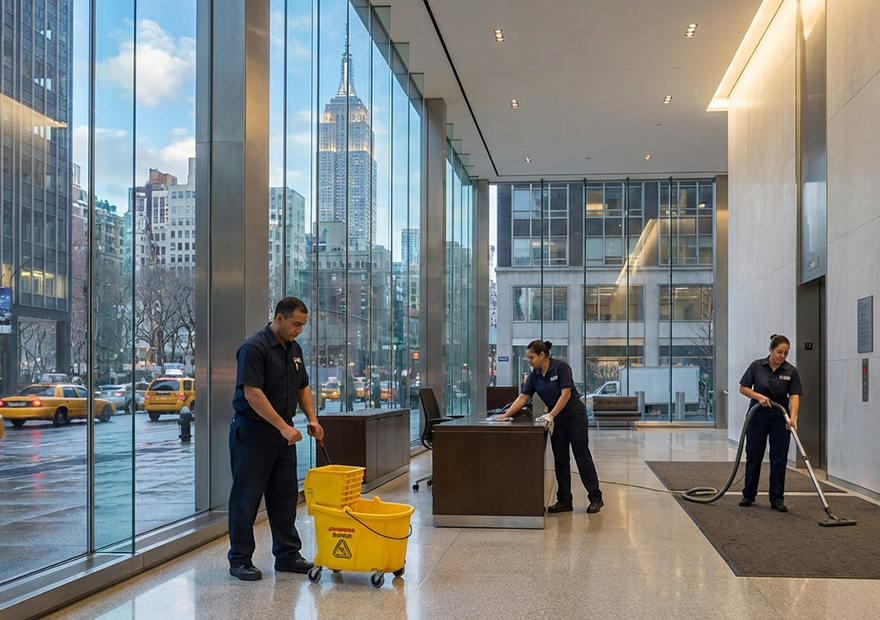
- elevator buttons and interior railings door handles and push plates on primary entrances reception desks, intercoms, and shared tablets kitchen and break-room countertops, faucet handles, and appliance touchpoints shared office equipment like copiers, keyboards, and phones
Measurement and continuous improvement
Set measurable objectives and revisit them. If the goal is to reduce surface contamination indicators by a certain percentage, use ATP testing or periodic microbiological swabs at baseline and after changes. Track response times to service calls and the percentage of scheduled tasks completed. Regularly solicit tenant feedback; a simple satisfaction survey after a month of revised cleaning can reveal gaps you would not have seen.
When to bring in a commercial cleaning company versus keeping work in-house
Small businesses with stable hours and predictable traffic can often keep core cleaning in-house and outsource periodic deep cleans or complex tasks. Larger https://felixzlnv274.lucialpiazzale.com/commercial-cleaning-company-best-practices-for-gyms-in-nyc-1 facilities, multi-site portfolios, or sensitive environments benefit from a commercial cleaning company’s systems, purchasing power, and trained supervisors. When selecting a partner, vet their training program, documentation practices, and ability to tailor products to your surfaces. Contracts should be specific about frequency, products, and response times for hotspots. Beware of quotes that simply promise "deep cleans" without details.
Final practical checklist for hiring and oversight
- verify the vendor’s references in similar NYC properties confirm insurance and bonding, and ask for worker screening procedures require demonstration of training and sample SOPs for high-touch surfaces agree on reporting format and escalation procedures for missed tasks include periodic performance reviews and flexibility to adjust schedules based on usage data
Confidence without overpromising
Cleaning services in NYC are not a panacea. A thoughtful program of high-touch disinfection, chosen products, documented procedures, and measurable oversight reduces one route of risk and improves occupant confidence. Whether you manage a co-op, a boutique retail shop, or a corporate office, specify what matters, measure against it, and treat cleaning as an operational function tied to occupancy and health metrics. The right commercial cleaning company will act as a partner, not a vendor, helping you balance costs, compliance, and the daily realities of a city where touchpoints are constant and expectations are high.
If you want practical next steps, start by mapping high-touch zones in one representative week, document current cleaning frequency, and pilot an adjusted program for four weeks with objective checks. The improvements you get will inform whether to scale up, change products, or revise staffing. Good disinfection is the sum of sensible choices and consistent execution, not a single heroic intervention. Impeccable Cleaning NYC does not promise zero germs, it promises fewer surprises, safer surfaces, and a building that shows it cares.
Impeccable Cleaning NYC
130 Jane St Apt 1F, New York, NY 10014
+1 (347) 483-3992
[email protected]
Website: https://www.impeccablecleaningnyc.com/